When selecting a custom product supplier, the risks of skipping proper vetting are high - ranging from financial losses to compliance issues. A structured approach ensures your investment is protected and your product meets quality and regulatory standards. Here’s a quick breakdown of the key steps:
- Define Product Requirements: Clearly outline materials, dimensions, certifications, packaging, and compliance standards.
- Research Suppliers: Use platforms like Alibaba or ForthSource to identify and shortlist reliable manufacturers.
- Verify Legitimacy: Check business licenses, certifications, and factory details through official databases or third-party audits.
- Assess Capabilities: Evaluate production capacity, technical expertise, and quality assurance processes.
- Request Samples: Test multiple samples to confirm consistency and quality.
- Negotiate Terms: Use clear contracts with payment schedules, penalties for delays, and intellectual property protections.
- Monitor Performance: Track delivery times, defect rates, and communication to ensure long-term reliability.
Key Insight: Proper vetting takes 4–6 weeks and requires 50–80 hours of work, but it can save you from costly mistakes. Tools like ForthSource and third-party audits simplify the process and reduce risks.
Follow these steps to secure a supplier that aligns with your business needs and avoids hidden costs or compliance issues.

7-Step Process for Vetting Custom Product Suppliers
How to Identify, Verify, Choose the Best Suppliers & Manufacturers for your Custom Tailored Products
Define Your Custom Product Requirements
Before reaching out to suppliers, you need to be crystal clear about what you're asking them to produce. Vague or incomplete requirements can lead to mismatched quotes, wasted time, and costly production mistakes. Suppliers can only deliver what you define precisely.
Think of your requirements document as a pre-contract agreement. It should answer every possible question a factory might have: What materials are needed? What dimensions? What certifications? What packaging? The more detailed you are upfront, the fewer issues you'll face later. As the CPSC emphasizes:
"A safe product begins in the design stage. A thoughtful design analysis should identify potential hazards and assess the risks; the analysis should include foreseeable consumer use (and misuse) of the product."
Technical Specifications and Compliance Standards
Your technical specifications should cover every physical and functional detail of your product. Define the exact materials - whether specific fabrics, plastics, or active ingredients. For private label or chemical-based products, request a Certificate of Analysis (CoA) to confirm the active components meet your requirements. Include precise dimensions, tolerances, finishes, colors, and any aesthetic details. Clearly outline how the product should perform and how it will be used to avoid confusion.
Packaging details matter too. Specify primary packaging (what touches the product directly), secondary packaging (like retail boxes), labels, hang tags, and shipping cartons. If you're working with consumables or cosmetics, set a minimum shelf life - typically 12–18 months upon delivery. Additionally, establish batch or lot control requirements to trace products in case of recalls.
Regulations differ depending on the market and product type. In the U.S., for example, food and drug products must meet FDA standards, children's products must comply with CPSIA, and chemical restrictions are regulated under REACH and RoHS. In Europe, many products require CE marking. Beyond mandatory regulations, consider adhering to industry standards like ISO 10377:2013 for product safety or ISO 9001 for quality management. If ethical sourcing is part of your brand's values, specify fair labor certifications (e.g., BSCI, SA8000, WRAP) or environmental certifications like ISO 14001.
Testing protocols should also be set early. Identify professional labs, such as SGS or Bureau Veritas, for final production testing. Define the performance criteria your product must meet. Also, confirm that your supplier's certifications are relevant to your product category - certifications are often specific to certain types of production.
Detailed specifications not only minimize risks but also help you plan order volumes and production timelines effectively.
Minimum Order Quantities (MOQs) and Lead Times
MOQ and lead time requirements are critical filters when selecting suppliers. These must align with your sales forecasts and inventory needs - order too little, and you risk stockouts; order too much, and you tie up capital in unsold inventory.
Lead times are especially important for meeting seasonal deadlines. A supplier's ability to provide clear timelines and handle smaller trial orders (e.g., 50–100 units) is a good indicator of their reliability. If it takes weeks to produce a simple sample, they’ll likely struggle with larger production runs.
Scalability is another factor to evaluate. A supplier that can't grow with your business may eventually hold you back. When you first contact a supplier, ask about their lead times for samples and mass production. Also, inquire about their production capacity - details like the number of employees, facility size, and current workload can provide insight into their capabilities. Smaller teams often mean longer fulfillment times. To avoid future issues, formalize lead times in your manufacturing agreement and include penalties for missed deadlines.
| Product Category | Typical Unit Cost | Average MOQ |
|---|---|---|
| Skincare (Serums/Creams) | $2.00 – $8.00 | 500+ units |
| Dietary Supplements | $0.50 – $3.00 | 1,000+ units |
| Home & Lifestyle (Candles) | $1.00 – $5.00 | 300+ units |
Data reflects mid-tier contract manufacturer averages for 2024–2025.
Clear order parameters streamline your supplier selection process and improve cost efficiency.
Total Cost Considerations
The quoted unit price is just the tip of the iceberg. What you really need to focus on is the total landed cost. This includes manufacturing, packaging, shipping, insurance, customs duties, taxes, and even currency exchange fluctuations. As Kennemer explains:
"The cheapest quote rarely delivers the lowest total cost. Quality issues, delays, compliance problems, and communication challenges quickly erode any initial savings."
Hidden costs can inflate your expenses by as much as 20–30%. For instance, some U.S. tariffs on Chinese imports have reached as high as 125%, significantly impacting landed costs. Low-cost suppliers may also cut corners, substituting materials or failing to meet regulatory standards, which can lead to customs seizures or other costly setbacks. If a quote seems unusually low, it’s often too good to be true.
During the quoting process, ask directly, "What other costs should I expect that aren't on this quote?". Ensure quotes clearly define Incoterms (e.g., FOB, DDP) so you understand where the supplier’s responsibility ends and your shipping costs begin. Plan for additional expenses like third-party inspections and factory audits - these upfront costs can save you from much larger losses down the line. Payment terms typically involve 30% upfront and 70% after a successful inspection.
Sometimes, paying a bit more upfront can save money in the long run. For example, a supplier who pre-cuts materials to size might charge more per unit but reduce your in-house labor costs. Finally, gauge the supplier’s responsiveness during the quoting phase. If they take more than 48 hours to answer technical cost questions, it’s a red flag for potential delays down the road.
Conduct Initial Supplier Research
Once you've nailed down your custom product requirements, the next step is finding factories that can bring your vision to life. Start by casting a wide net - aim for about 20–30 potential suppliers - and then narrow it down to a shortlist of 3–5 for closer evaluation. Considering Alibaba alone hosts over 200,000 suppliers and 200 million products, having a structured approach is key. This will help you separate genuine manufacturers from trading companies or less reliable operators. Begin with broad searches, apply filters, and conduct verification checks to quickly weed out weaker candidates. This research phase sets the stage for a more thorough evaluation later.
Search for Suppliers on Alibaba
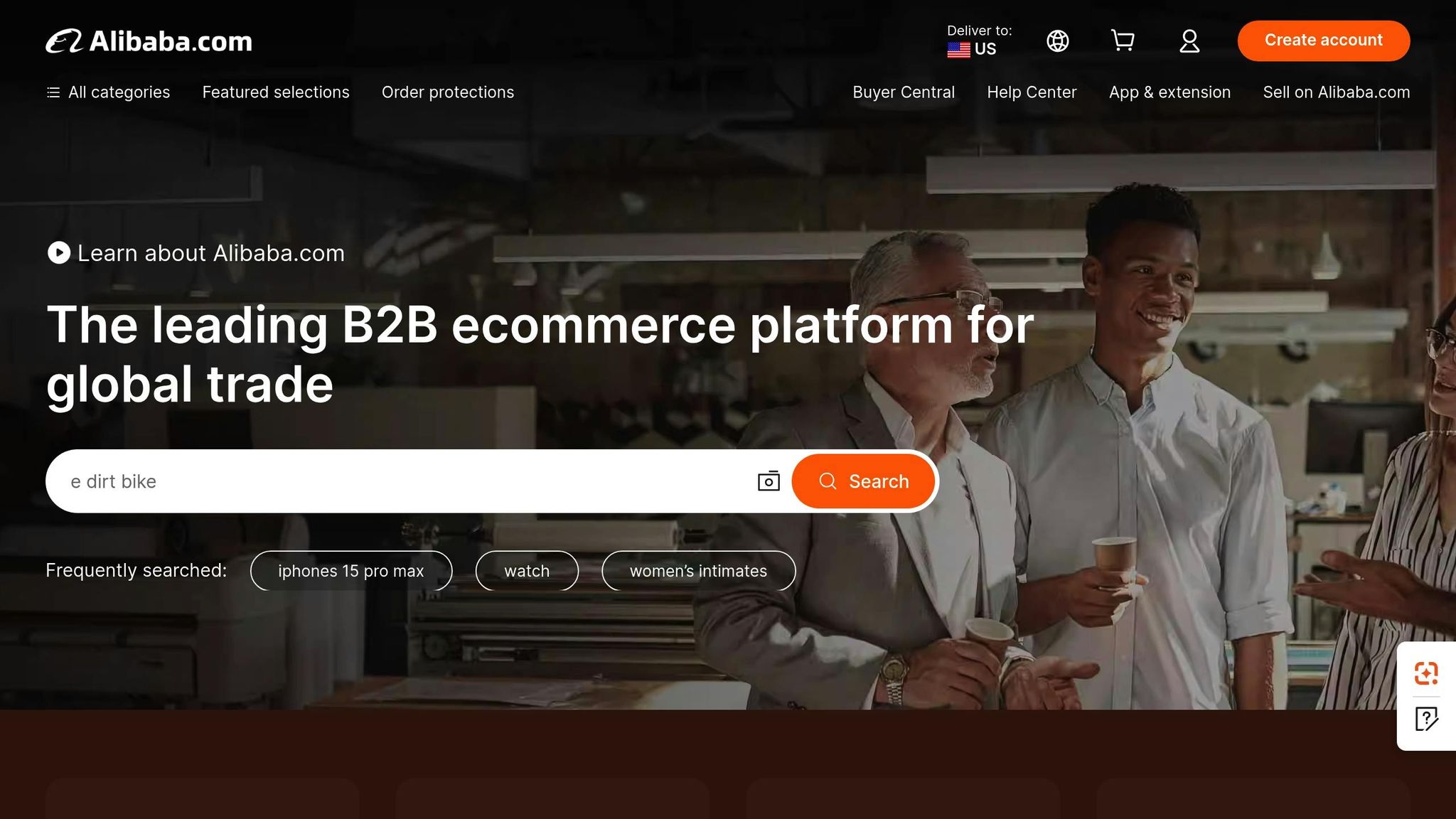
Alibaba remains a powerhouse in the B2B custom manufacturing world, connecting over 40 million active buyers globally and handling 400,000 daily product inquiries. To find the right factories, use specific keywords like "OEM [Product Name]" or "Custom [Product Name]." For example, instead of searching "leather bags", try "OEM leather bags" to uncover suppliers equipped for original equipment manufacturing.
Take advantage of Alibaba’s built-in filters to streamline your search. Look for:
- Verified Suppliers: These suppliers have been inspected by third parties like SGS or Intertek.
- Trade Assurance: This option offers payment protection.
- Gold Supplier Badge: Indicates a premium membership with basic authentication.
Within the Verified Suppliers category, you’ll find three main types of suppliers: Custom Manufacturers (dedicated production lines), Multispecialty Suppliers (low minimum order quantities and diverse products), and Brand Holders. For custom orders, focusing on Custom Manufacturers can save you time and effort.
To further refine your search, prioritize suppliers with at least three years of experience on the platform. Longevity often signals stable manufacturing processes and familiarity with international trade. Additionally, consider location - regions like Shenzhen (electronics) or Zhejiang (leather goods) are well-known for specific product categories and may offer access to specialized materials at competitive prices.
To differentiate manufacturers from trading companies, use the "Common Thread" test: genuine manufacturers typically focus on a specific category, such as textiles or electronics, rather than offering a mix of unrelated products. If you’re still unsure, Alibaba’s mobile app includes an image search feature - upload a product photo to find factories producing similar items.
Use ForthSource for Supplier Discovery

If Alibaba’s vast listings feel overwhelming, ForthSource can simplify the process. Acting as an intelligence layer over Alibaba, ForthSource aggregates supplier data and assigns each a Trust Score (0–100) based on transaction history and customer reviews. This makes it easier to identify reliable factories without wading through sponsored ads or unverified listings.
ForthSource also provides useful tools for premium users, such as a Real-Time Landed Cost Calculator. This feature estimates shipping costs (air, sea, or express) to the U.S., including import duties and taxes, so you can get a clear picture of total costs before reaching out to suppliers. Enterprise users gain access to Baidu Intelligence Reports, which verify a factory’s legitimacy within China - an extra layer of due diligence for large orders.
Shortlist Suppliers
Once you’ve identified 20–30 potential candidates, it’s time to narrow the list to 3–5 suppliers for a deeper dive. Start by eliminating suppliers with red flags - those using free-email domains, offering inconsistent product catalogs, or demanding immediate deposits. Avoid suppliers with a mix of unrelated items, as this typically signals a trading company rather than a manufacturer.
Next, focus on product specialization. A legitimate manufacturer will usually have a focused product range. Check their export history as well - suppliers experienced in shipping to the U.S. or EU are more likely to understand local quality standards and regulations.
Evaluate production capacity by reviewing employee numbers and annual turnover data. Finally, test their communication skills. Send a detailed Request for Quotation (RFQ) outlining dimensions, materials, and expected annual volume. Suppliers who respond professionally within 24–48 hours are more likely to be reliable partners.
Evaluate Supplier Legitimacy and Capabilities
Once you've narrowed down your list to 3–5 suppliers, it’s time to dig deeper. This step is all about ensuring you’re dealing with genuine manufacturers who have the technical ability to meet your needs. Why is this important? Supplier fraud is a massive issue - global losses from such scams hit over $42 billion in 2024, with nearly 60% of businesses reporting at least one supplier-related loss. Proper vetting takes time - typically 50–80 hours spread over 4–6 weeks.
Verify Business Legitimacy
Start by requesting essential documents like the business license, tax ID, and ownership details. If you’re dealing with Chinese suppliers, pay close attention to the registered capital listed on their business license. For example, amounts below RMB 500,000 (around $70,000) often indicate a trading company rather than a manufacturer. Keep in mind that different industries have varying capital requirements - watch manufacturers might operate with less than RMB 1,000,000, while LED display manufacturers usually require much more.
Check the license's “Business Scope.” Manufacturers typically list terms like "production" or "assembly", while trading companies lean toward "wholesale", "trade", or "distribution". Also, ensure the bank account beneficiary matches the registered company name - never pay into personal or offshore accounts. You can verify these details through China's National Enterprise Credit Information Publicity System or third-party services like SGS or Intertek.
Don’t stop there. Use tools like Google Maps or satellite imagery to confirm the factory’s address - make sure it’s not just a residential building or an empty lot. Platforms like ImportGenius or Panjiva can also provide shipment history and client data to validate the supplier’s operations. Additionally, ask for tax returns and financial statements to check for high debt levels or legal issues, which could signal potential risks.
| Document Type | Verification Method |
|---|---|
| Business License | Check local government databases or provincial company records |
| Bank Account Details | Cross-check with the business license or contact the issuing bank |
| QMS Certificate | Confirm with the issuing organization (e.g., SGS, TUV, Bureau Veritas) |
| Product Certificates | Verify SKU and validity with the testing authority (e.g., FCC, CE) |
Assess Technical Capabilities
Once you’ve confirmed legitimacy, it’s time to assess the supplier’s technical capabilities. Documents alone won’t cut it - look at their machinery, production lines, and capacity to handle your order’s complexity and volume. Request timestamped photos or videos of their production processes and verify certifications like ISO 9001 with issuing bodies such as SGS or Bureau Veritas.
Pay attention to the certificate’s Product Scope - a factory certified for textiles, for example, won’t meet the standards for electronics manufacturing. Compare production capacities across departments. If assembly capacity far exceeds packing capacity, it could mean they’re outsourcing parts of the process to unvetted third parties. During factory visits, check whether key engineers have permanent workstations and consistent teams - if not, they might be temporary hires brought in to impress visitors. Review internal metrics like yield rates, waste rates, and quality control procedures to measure technical proficiency. For high-risk products like electronics or cosmetics, consider using third-party labs to verify safety and material claims.
"The cheapest quote rarely delivers the lowest total cost. Quality issues, delays, compliance problems, and communication challenges quickly erode any initial savings."
– Cosmo Sourcing
Request Samples and Audit Communication
Before committing to mass production, place a trial order for 10–30% of your full production run. This helps uncover potential issues and test the supplier’s consistency. A single free sample isn’t enough - suppliers often cherry-pick the best for display. Instead, test orders with custom requirements or expedited shipping to see how they handle real-world challenges.
Communication during this phase is equally revealing. Speak directly with sales representatives - phone calls often provide more candid insights than emails. Hesitation or frequent disconnections can be red flags. Set clear expectations for response times (usually 24–48 hours) and request a dedicated point of contact to ensure smooth communication. Be wary of generic responses or suppliers reluctant to provide references; these could indicate a trading company posing as a manufacturer or hidden fees.
Watch for other warning signs, such as the use of free email domains (e.g., @gmail.com), pressure for immediate deposits, or unrealistic claims like "we can make anything" without a minimum order. If a supplier requires constant oversight or expects you to solve basic operational issues during the vetting process, it’s a sign of weak internal controls. Face-to-face meetings with managers can also provide valuable insights. Asking about the owner’s other investments, like real estate, might reveal a lack of long-term commitment to manufacturing.
Thorough sample testing and consistent communication lay the groundwork for selecting the right manufacturing partner.
sbb-itb-633367f
Perform Advanced Risk Assessments
Once you've confirmed a supplier's legitimacy and technical capabilities, it's time to dig deeper with advanced risk assessments. These evaluations can uncover hidden issues that might not be apparent at first glance. Professional factory audits, for instance, typically take 1–2 days on-site and cost anywhere from $800 to $4,000, depending on the scope of the assessment. While this might seem like a significant expense, thorough factory vetting has saved individual sourcing operations from losses exceeding $500,000 due to fraud. Building on your initial supplier evaluations, these methods can expose operational and compliance risks that could otherwise go unnoticed.
Factory Audits and On-Site Inspections
Sometimes, physical inspections reveal problems that paperwork simply can't. Start by verifying the supplier's production capacity. Check their machinery and output levels for inconsistencies. For example, if the packing area processes far more than what the assembly line produces, it could indicate that the supplier is outsourcing to unvetted third parties. Review equipment maintenance logs and calibration records for testing instruments to ensure consistent quality.
It's also critical to confirm that quality control operates independently from production management. Look for dedicated quality control areas and inspection stations throughout the production process. Follow the material flow - from raw materials to final packaging - to identify bottlenecks or unauthorized subcontracting.
Safety and compliance are equally important. Ensure proper ventilation, safe storage for hazardous materials, and the availability of protective gear. Evaluate the building's structural integrity, fire safety systems, and waste management practices to avoid suppliers that might face government shutdowns. Additionally, interview management and observe the workforce. If key engineers lack permanent workstations or seem unfamiliar with their colleagues, they might be temporary hires brought in solely to impress visitors.
| Audit Type | Focus Area | Typical Cost | Duration |
|---|---|---|---|
| Basic Capability Audit | Production capacity and QMS verification | $800–$1,200 | 1–2 days |
| Comprehensive Social/Technical Audit | Facility assessment, labor practices, and environmental management | $1,500–$2,500 | 2–3 days |
| Product-Specific Technical Audit | Specialized engineering assessments and custom testing | $2,000–$4,000 | 2–4 days |
If traveling to the site isn't an option, consider hiring local inspectors with regional expertise. These professionals often have a better understanding of local laws, cultural nuances, and common misrepresentation tactics than remote assessors. Mentioning your audit plans early in negotiations can also help weed out dishonest suppliers or trading companies masquerading as manufacturers.
"Anything can be misrepresented!! Something physical is harder to fake."
– Renaud Anjoran, CEO, The Sofeast Group
Use Baidu Intelligence for Verification

After conducting physical inspections, bolster your findings with digital verification tools. Beyond reviewing Alibaba profiles, cross-check supplier credentials using official Chinese government databases and search tools. The National Enterprise Credit Information Publicity System (gsxt.gov.cn) is a valuable resource, offering records on business licenses, tax registrations, and ownership details. Chinese-language search engines can also uncover public records, legal disputes, and government blacklists that might not appear on English-language B2B platforms.
For those using ForthSource Enterprise, Baidu Intelligence features can provide additional insights. These tools aggregate WeChat verification, legal reports, and official government records. You can even use satellite imagery to confirm factory addresses, ensuring the location isn't a residential building or an empty lot. When dealing with Chinese suppliers, request a recent Value-Added Tax (VAT) invoice. Legitimate manufacturers must issue these invoices to qualify for government tax rebates. These extra layers of verification can help catch discrepancies before production begins.
Compare and Score Suppliers
Once you've identified risks and verified supplier capabilities, the next step is to weigh your options using a clear and objective process. A structured scoring system can help you focus on what matters most to your business, eliminating guesswork and emphasizing key priorities.
Create a Scoring Checklist
Start with a weighted comparison table to evaluate suppliers. Trust and legitimacy should hold the most weight - ensure suppliers have valid business licenses, at least three years of operation, and a proven export history to your region. Quality assurance is equally vital, so check for ISO 9001 certification and review historical defect rates.
Technical capability should have moderate weight. Assess the age and sophistication of their equipment, workforce skill levels, and any relevant patents they hold. Financial health is another critical factor - review their credit ratings, annual turnover, and profit stability to ensure they can handle economic challenges. For logistics and cost, compare unit pricing, setup fees, minimum order quantities, and lead times while using consistent Incoterms. Lastly, evaluate communication quality by monitoring response times (ideally within 24 to 48 hours), language skills, and their openness to video calls.
Platforms like ForthSource simplify this process. It aggregates Alibaba suppliers and assigns a Trust Score (0 to 100) based on verified business licenses, transaction volumes, response rates, and customer reviews. Premium users can also access the Real-Time Landed Cost Calculator, which estimates shipping rates (air, sea, or express) to the U.S., including import duties and taxes. Enterprise users gain access to Baidu Intelligence reports, offering deeper background checks using domestic Chinese data to verify factory credentials - an extra safeguard for catching discrepancies often missed on English-facing profiles.
"The cheapest quote rarely delivers the lowest total cost. Quality issues, delays, compliance problems, and communication challenges quickly erode any initial savings."
– James Kennemer, Founder, Cosmo Sourcing
When comparing quotes, don’t just focus on the unit price. Look at the total cost of ownership, factoring in international duties, currency fluctuations, rework costs, and customs fees. For instance, a supplier offering $8.00 per unit without a warranty and a 25-day delivery might cost more in the long run than one quoting $9.50 per unit with a one-year warranty and an 18-day delivery. Once you've compiled scores, gather direct feedback to validate your findings.
Request References and Negotiate Terms
After scoring suppliers, take the time to verify their performance through references and negotiate terms carefully. Request specific buyer success stories and names of past clients. Focus on suppliers experienced in shipping to the U.S., as they’re more likely to understand local regulatory requirements and customs processes. If you're in a niche, like Amazon selling, ask for references from similar businesses to confirm they understand platform-specific needs like FBA-compliant packaging.
"You can tell a lot about a supplier by who they have worked with previously."
– Alibaba.com Team
Don’t rely solely on the references suppliers provide. Use third-party tools like ImportYeti or Panjiva to verify their import data and confirm they’re manufacturing for the clients they claim. When checking references, validate phone numbers and ensure you’re speaking with actual past clients. If a supplier avoids providing business licenses, tax IDs, or client references, consider it a red flag.
During negotiations, follow the 70/30 rule: listen 70% of the time to understand the supplier’s constraints, and speak 30% to propose solutions. Evaluate the total cost of ownership, including shipping, insurance, import duties, inventory holding costs, and the potential costs of quality issues or delays. Prioritize suppliers that offer value-added services like packaging design, labeling compliance, or warranties. These extras may justify a higher unit price by reducing long-term risks. Avoid paying 100% upfront - use escrow services or milestone-based payments, such as a 30% deposit with the balance due after inspection. For initial transactions, platforms like Alibaba Trade Assurance can help protect your funds.
Before committing to full-scale production, place a trial order for 10% to 30% of the total run to test consistency. Use bilingual contracts written in both English and the supplier's local language to avoid misunderstandings and ensure enforceability. Clearly define measurable KPIs in the contract, such as lead times, acceptable defect rates, and response time expectations.
Final Selection and Onboarding
Supplier-related losses can be a serious threat, emphasizing the importance of having detailed contracts and consistent performance tracking. A strong agreement combined with clear monitoring practices can help you sidestep costly errors. Here's how to finalize your supplier choice and establish a reliable partnership.
Formalize Contracts and Agreements
Your contract should cover the essentials - pricing, delivery timelines, and key provisions for quality control and risk management. Include clear commercial terms, such as pricing structures, payment schedules (e.g., a 30/70 split), minimum order quantities, and shipping conditions using standard Incoterms. Quality assurance clauses should outline product specifications, inspection protocols, and defect resolution processes. Safeguard your intellectual property with non-disclosure agreements, usage restrictions, and explicit ownership terms for molds and tooling.
Risk management clauses are equally important. Specify penalties for delays or quality issues, warranty terms, and clear guidelines for liability and dispute resolution. Use a structured framework to define business needs, fulfillment processes, key contacts, and measurable KPIs. To future-proof the partnership, include audit rights and scalability terms to ensure your supplier can adapt to your growing needs.
"Thorough supplier vetting isn't just a due diligence checkbox - it's arguably the most consequential decision in your entire product development journey."
– James Kennemer, Founder, Cosmo Sourcing
Consider drafting bilingual contracts in both English and the supplier's local language to avoid misunderstandings and ensure enforceability. Tie payments to milestones and consider using escrow services for added security. Also, verify certifications (ISO, CE, FDA) directly with the issuing bodies instead of relying solely on the documents provided.
Once the contracts are signed, the focus shifts to ongoing supplier management and performance monitoring.
Monitor Performance and Manage the Relationship
Use a supplier scorecard to track critical performance metrics like delivery times, return rates, and fulfillment reliability. Set clear KPIs, such as response times under six hours, over 95% on-time deliveries, and high reorder rates. Conduct regular performance reviews - quarterly or bi-annually - to catch and resolve issues early.
Establish structured communication protocols with scheduled updates, designated points of contact, and clear escalation paths for urgent issues. If quality problems arise, work with your supplier to improve their processes rather than immediately looking for alternatives. Maintaining a diverse supplier network is also wise, as it provides backup options in case of disruptions.
"Your supply chain is only as strong as its weakest link."
– Joe Church Woods, Anvyl
Be cautious about potential fraud. Always verify requests for changes to payment methods or bank details by calling a trusted, verified contact. Leverage tools like procurement software or ERP systems to streamline communication and provide real-time feedback to your supplier. Building a strong partnership takes time, trust, and a shared commitment to overcoming challenges through open and transparent communication.
Conclusion
Selecting the right custom product suppliers is at the heart of a successful manufacturing operation. It’s not a quick task - expect to spend between 50 and 80 hours over 4 to 6 weeks. But this effort is absolutely necessary, especially when you consider that supplier fraud led to global losses exceeding $42 billion in 2024, and nearly 60% of businesses faced at least one supplier-related issue last year.
Using the strategies outlined earlier, focus on setting clear expectations, verifying supplier credentials, and maintaining ongoing oversight. Define your technical specifications, minimum order quantities (MOQs), lead times, and compliance requirements upfront. Verify business registrations through official databases, request multiple sample rounds, and conduct thorough factory audits. Cross-check certifications with their issuing authorities and even use satellite imagery to confirm facility locations. For detailed guidance on these steps, revisit the sections on requirements definition and audit practices.
Your contracts should protect your interests by including quality benchmarks, intellectual property safeguards, and penalties for missed deadlines. Once operations are underway, keep a close eye on supplier performance using tools like scorecards to evaluate delivery times, defect rates, and communication. Always maintain vetted backup suppliers to reduce risks.
Tools like ForthSource can make this process more efficient and reliable. By aggregating Alibaba data and assigning a Trust Score based on real-time intelligence, ForthSource simplifies supplier selection. Features like the Real-Time Landed Cost Calculator and Baidu Intelligence Reports provide extra layers of verification, saving you weeks of manual research. These insights help ensure you’re working with dependable partners.
Take the time to vet suppliers thoroughly, use data-driven tools to minimize risks, and focus on building partnerships that are transparent and built to last.
FAQs
What key factors should I consider when defining requirements for a custom product?
Defining clear requirements is a crucial first step for any custom product project. Begin by pinpointing the business need and identifying your target audience. What problem is your product solving, and what are the main goals - whether it’s keeping costs low, ensuring premium quality, or speeding up delivery? These overarching objectives will shape every decision moving forward.
Next, detail the functional and performance specifications. This includes the features your product must have, its ease of use, reliability, and any key performance benchmarks like durability or load capacity. Be sure to also define the physical attributes - materials, dimensions, finishes, and compliance with any safety or regulatory standards.
Lastly, address the logistical considerations. Think about order quantities, lead times, packaging, and shipping requirements. By documenting all these details thoroughly, you’ll simplify communication with suppliers. Platforms like ForthSource can help you connect with manufacturers that meet your criteria, minimizing risks and ensuring a smoother production process.
How do I confirm if a custom product supplier is legitimate?
To ensure a supplier is legitimate, start by requesting key official documents such as their business license or tax identification number. Cross-check these details with relevant government registries to confirm their authenticity. Look for industry-specific certifications like ISO 9001, FDA registration, or SA8000, and verify these through the respective certifying authority's website.
Next, evaluate their online presence. Check for consistent export records, active and genuine social media profiles, and verified badges on platforms like Alibaba. It’s also helpful to request recent customer references to gauge their reputation. For added assurance, consider placing a small trial order to personally assess the quality and reliability of their products. If visiting their facility isn’t feasible, hiring a local inspection agency to audit their operations can provide an extra layer of confidence.
Platforms like ForthSource make this process easier by compiling essential details - such as legal filings, export history, and pricing - into a single, real-time scorecard. This tool helps you spot reliable suppliers quickly, cutting down the risk of fraud and saving time during your vetting process.
What steps can I take to build a reliable, long-term relationship with a supplier?
To build a dependable, long-term relationship with a supplier, start by conducting a detailed vetting process. Clearly outline your product requirements, including materials, certifications, order sizes, and delivery timelines. Verify the supplier's credentials by checking their business licenses, tax identification numbers, and any relevant factory certifications, such as ISO or FDA. Consider on-site audits or hiring third-party inspectors to evaluate their production capabilities, quality control measures, and working conditions. Once you’ve chosen a supplier, formalize the partnership with a contract that spells out all key terms - pricing, order quantities, delivery schedules, and intellectual property protections.
After onboarding, approach the supplier as a partner. Set measurable performance benchmarks, such as on-time delivery rates and acceptable defect levels, and review these regularly. Conduct periodic quality checks on both production processes and incoming shipments to address any issues early. Keep communication lines open with consistent updates and shared tools to resolve problems quickly. To safeguard against disruptions, establish contingency plans, including backup suppliers. Platforms like ForthSource can simplify supplier evaluation and monitoring by offering real-time data and reliability scores, helping you make informed sourcing decisions.