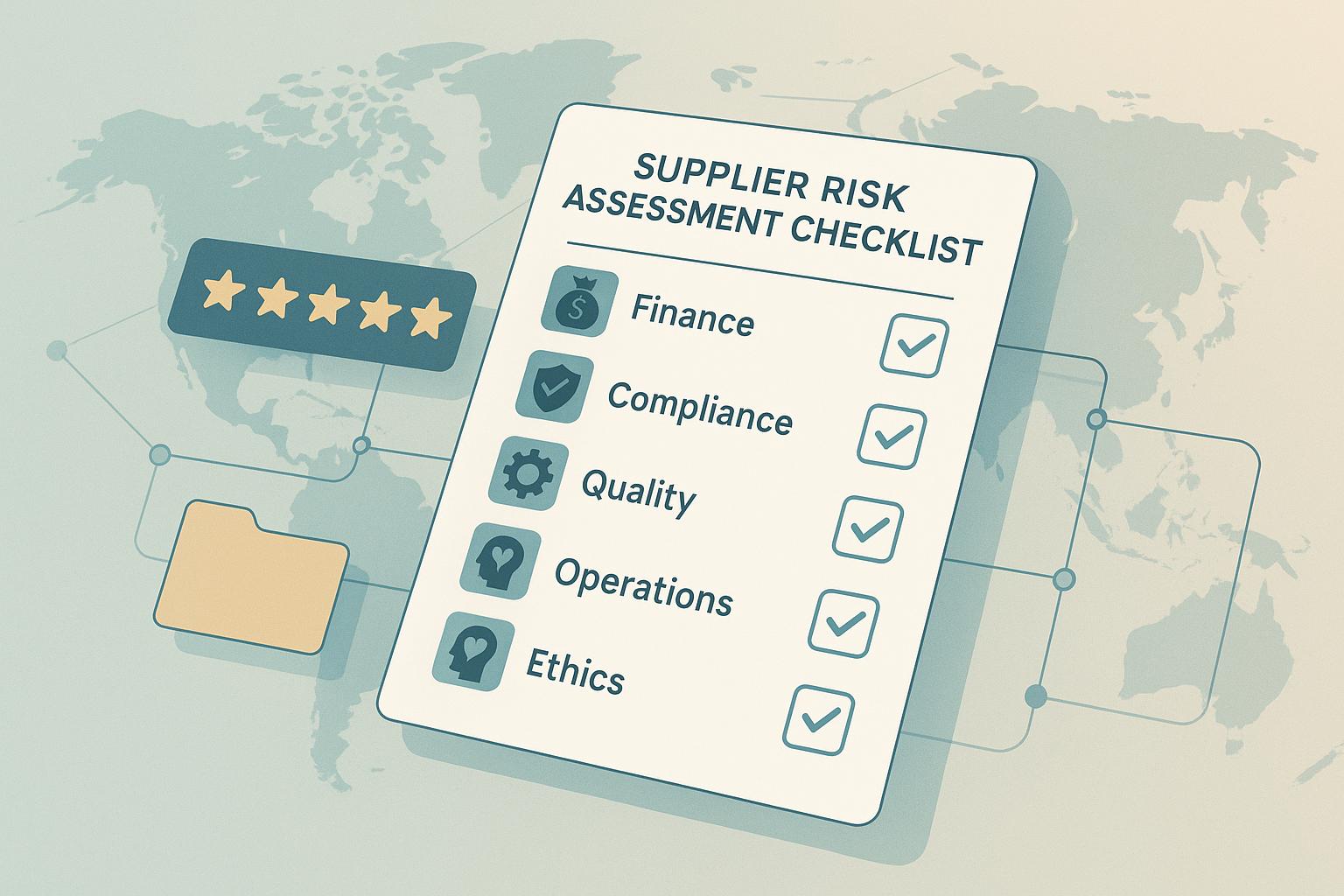
Global sourcing has long been a cornerstone of retail and e-commerce, but it’s also one of the most complex and time-intensive processes. From sifting through thousands of supplier profiles on platforms like Alibaba to ensuring quality, compliance, and ethical practices, the journey is fraught with challenges. For Shopify merchants, DTC brand founders, Amazon FBA sellers, and sourcing managers, the stakes are even higher - choosing the wrong supplier can lead to financial losses, reputational damage, and production delays.
Enter AI-powered sourcing platforms like Source Ready, which are revolutionizing how brands discover, evaluate, and onboard global suppliers. In a recent interview on the Retail Voices podcast, Ricky Hoe, founder of Source Ready, shared insights into how AI is reshaping the supply chain landscape. This article unpacks the conversation and explores how AI is helping businesses streamline their sourcing processes, mitigate risks, and stay competitive.
The Challenge of Global Sourcing
Traditional supplier sourcing is riddled with inefficiencies. Ricky Hoe highlighted three key pain points that businesses face:
- Supplier Visibility: Many of the world’s best manufacturers aren’t easily discoverable online. Even on popular platforms like Alibaba, the search results are often dominated by factories that pay for visibility - many of which are actually trading companies masquerading as manufacturers.
- Verification Issues: Without professional procurement expertise, it’s challenging to distinguish credible suppliers from those offering subpar products or inflated quotes. For example, an inexperienced buyer might receive quotes for a polo shirt ranging from $5 to $15, with no clear way to identify the best option.
- Geographic Limitations: While Alibaba is heavily concentrated in China, businesses increasingly want to diversify their supply chains to countries like Vietnam, Mexico, India, or Indonesia. However, finding reliable suppliers in these regions is far more difficult due to limited online presence and language barriers.
sbb-itb-633367f
How AI is Revolutionizing the Sourcing Process
AI is addressing these challenges head-on by leveraging big data, automation, and advanced analytics. Platforms like Source Ready are not just simplifying the process; they’re making it smarter, faster, and more transparent. Here’s how:
1. Aggregating Global Supplier Data
Source Ready aggregates data from hundreds of sources, including:
- Customs filings from 65+ countries (e.g., U.S., Vietnam, Indonesia, Mexico)
- Trade show exhibitor lists
- Certification databases (e.g., FDA compliance, BSCI for ethical labor practices)
By enriching this data, the platform creates unified supplier profiles that include key details like production capabilities, certifications, and contact information. This eliminates the guesswork and allows buyers to make informed decisions.
2. Pre-Screening with AI
Traditionally, sifting through potential suppliers is a manual, time-consuming task. AI, however, excels at screening thousands of profiles against specific criteria in seconds. For example, a sourcing manager could input the following requirements:
- Suppliers in a low-tariff country
- FDA certification for food products
- At least 10 years of experience
- Production history with similar brands
Instead of spending weeks evaluating hundreds of suppliers, AI narrows the list down to the top candidates, saving time and reducing human error.
3. Automating Outreach and Q&A
One of the most tedious parts of sourcing is the back-and-forth communication with suppliers. AI can streamline this by automating outreach and follow-ups. For instance, it can send bulk questionnaires to suppliers, retrieve responses, and organize the data for easy analysis.
4. Data-Driven Decision Making
AI doesn’t just find suppliers; it helps rank them based on key metrics like compliance, pricing, and production history. This allows businesses to focus on high-value tasks like relationship-building and final negotiations, while leaving the initial vetting to AI.
Building a Resilient and Diverse Supply Chain
Ricky Hoe emphasized that supply chain diversification is no longer optional - it’s essential for mitigating risks. Geopolitical tensions, tariffs, and material shortages have underscored the need for businesses to reduce their overreliance on any single region, particularly China. However, diversification comes with its own challenges, such as:
- Language and cultural barriers
- Lack of established sourcing platforms in regions outside China
- Higher operational overhead in less mature markets
Tips for Responsible Diversification
- Start Small: Begin with test orders or simpler SKUs when vetting new suppliers in unfamiliar regions.
- Evaluate Total Costs: Don’t just look at factory quotes. Consider shipping, tariffs, quality control, and operational overhead to get a true picture of cost.
- Develop Backup Plans: For every supplier in China, aim to find a secondary option in another region to build redundancy over time.
The Role of AI in Product Development
Beyond supplier discovery, AI is also playing a role in rapid prototyping and product ideation. Ricky shared how Source Ready can generate photorealistic renders and early bills of materials based on simple inputs. For example, if a retailer wants to create a Ralph Lauren-style polo shirt with a different fabric and logo, AI can produce a high-quality mockup in minutes. This speeds up the product development process and allows brands to test ideas quickly without committing to expensive design resources.
However, it’s important to note that AI-generated prototypes are not production-ready. Factories still play a critical role in creating detailed tech packs and finalizing specifications.
Balancing Automation with Human Expertise
While AI is a powerful tool, it’s not a replacement for human judgment. As Ricky noted, AI excels at pre-screening and data processing, but humans are indispensable for nuanced decision-making. For instance:
- Building trust and relationships with suppliers requires human interaction.
- Strategic decisions, like balancing cost with quality or evaluating long-term supplier fit, are too complex for AI to handle alone.
AI should be seen as an enabler, not a threat. By automating repetitive tasks, it frees up time for sourcing managers to focus on high-value activities.
Common Mistakes in Sourcing - and How to Avoid Them
For new and emerging retailers, global sourcing can be a minefield. Here are some of the most common pitfalls and actionable advice to overcome them:
Mistake 1: Overlooking Total Costs
Solution: Look beyond factory quotes. Factor in shipping, tariffs, compliance costs, and quality issues to get a true picture of cost.
Mistake 2: Moving Too Quickly to Diversify
Solution: Diversify gradually. Start with small orders in new regions, and scale up once suppliers prove their reliability.
Mistake 3: Sticking with Legacy Suppliers
Solution: Continuously evaluate your supply chain. As your business grows, consider upgrading to suppliers that better match your scale and needs.
Key Takeaways
- AI streamlines supplier discovery: By aggregating data from multiple sources and applying advanced filtering, AI reduces the time and effort required to find credible suppliers.
- Diversification is a long-term investment: Gradually expand your supplier base to reduce reliance on a single region while mitigating risks.
- Automation complements human expertise: Use AI to handle repetitive tasks and data analysis, leaving humans to focus on strategic decisions and relationship-building.
- Evaluate end-to-end costs: Consider factors like shipping, tariffs, and quality control, not just production quotes.
- Adopt AI responsibly: Train your team to use AI effectively, and position it as a tool to enhance productivity rather than replace jobs.
Global sourcing is evolving rapidly, and those who embrace AI will be better equipped to navigate its challenges. For Shopify merchants, DTC brands, and sourcing managers, the future lies in leveraging technology to build smarter, more resilient supply chains. The key is to strike the right balance between automation and human expertise while staying adaptable to changing market dynamics.
Source: "Inside: Global Sourcing with Ricky Ho from SourceReady" - Retail101 Online, YouTube, Dec 12, 2025 - https://www.youtube.com/watch?v=pP7OtmswDKE